 Worldwide Shipping
 Trusted Since 2017
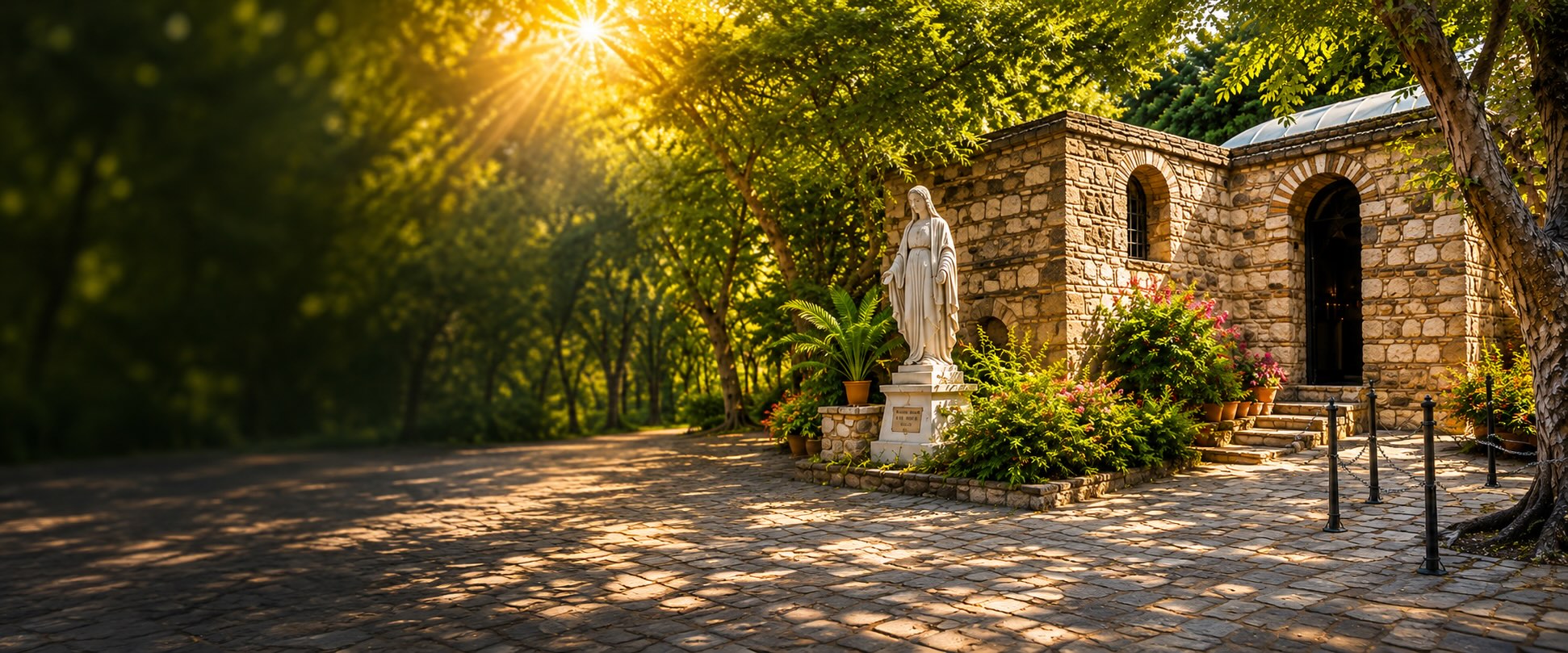
Some places invite us to slow down before they invite us to learn. The House of Virgin Mary is one of them. Its small scale contrasts with the monumental ruins nearby, yet its story reaches far beyond the walls of the chapel. Understanding it means bringing together the landscape, Christian memory, recorded events and the prayers of visitors.
On the slopes of Mount Bülbül
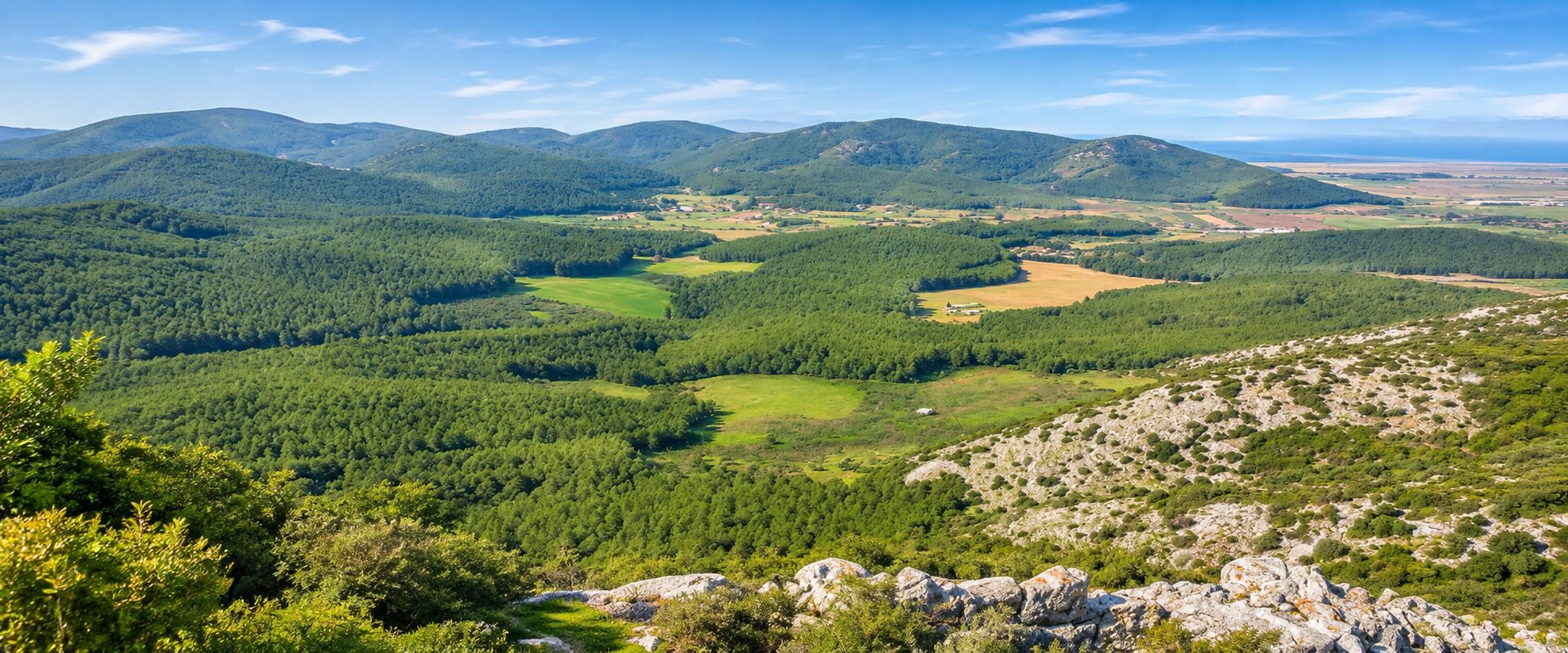
The sanctuary stands on Mount Bülbül near Selçuk, in the İzmir region of western Türkiye. The Ministry of Culture and Tourism places it about seven kilometres south of ancient Ephesus. Its hillside location is an essential part of the experience: it is a destination above the city, not a room within the archaeological ruins.
The approach brings a change of atmosphere. The broad streets and public monuments of ancient Ephesus give way to a more intimate setting of stone, trees and a small place of prayer. That contrast helps explain why visitors remember both the journey and the quiet moment of arrival.
Mary, John and the meaning of a home
John 19:26–27 describes Jesus entrusting his mother and the beloved disciple to one another at the Cross. The disciple then receives her into his own home. For Christian readers, the passage carries a profound image of care, belonging and a family formed through faith.
The passage itself does not name Ephesus or describe a journey there. The connection between Mary, John and Ephesus belongs to a wider Christian tradition. Keeping that distinction clear allows the scriptural text and the devotional history of this place to be appreciated on their own terms.
Ephesus and the Council of 431
The Christian history of Ephesus extends beyond the mountain sanctuary. The Church of Mary in the ancient city and the Basilica of St John on Ayasuluk Hill are separate monuments. They help explain the city’s place in the development of Christianity and are highlighted in UNESCO’s account of its heritage.
The Council of Ephesus in 431 is particularly important in the history of Marian teaching. Catholic teaching associates it with the title Theotokos, or Mother of God, referring to Mary’s relationship to Jesus Christ. The council’s history should not be confused with the discovery or construction of today’s hillside shrine.
The rediscovery that renewed a pilgrimage
The modern story of the sanctuary is closely connected to nineteenth-century interest in accounts attributed to a religious visionary. Official Turkish cultural sources describe a search by Lazarist priests in 1891 that identified the remains associated with the present pilgrimage site.
The rediscovery gave a physical focus to a devotional story. From then on, restoration, prayer and visiting helped shape the place known today. A nineteenth-century identification and a tradition about a first-century life are different historical propositions; neither needs to be blurred for the sanctuary’s spiritual importance to be understood.
The chapel and its restored fabric
Official descriptions identify a small, domed chapel with a cruciform plan. The Ministry also records restoration in 1951. Rather than a grand basilica, the building offers an intimate architectural setting, where the scale of the rooms directs attention toward prayer and contemplation.
The building visible today has a history of restoration. It should not be described as an entirely unchanged first-century house. Its stones, arrangement and devotional use belong to a longer story of preservation and renewal, through which visitors encounter the tradition associated with Mary.
Papal visits and the modern record
Paul VI visited the region in 1967. John Paul II visited the shrine on 30 November 1979, and Benedict XVI celebrated Mass there on 29 November 2006. In his published homily, Benedict expressly recalled the pilgrimages of his predecessors. These are documented events in the sanctuary’s modern history.
Their significance is pastoral and devotional as well as historical: they brought international attention to a living community of prayer. The official texts preserve the setting and spiritual themes of the visits, allowing readers to encounter their message in its original context.
Visiting with care and attention
Allow time to experience the sanctuary as a place of prayer as well as a cultural destination. Keep voices low, make room for people in contemplation and follow the instructions displayed on site. Ask before photographing worship or the interior, and let the needs of those praying guide your behaviour.
Opening arrangements, services and visitor conditions should be checked with current local information before travelling. The map link on this page helps locate the sanctuary; the cultural sources below provide further context. A visit is most rewarding when learning and quiet attention are given equal space.
EPHESUS · 29.11.2006
Benedict XVI in Ephesus: motherhood, unity and peace
The homily delivered on 29 November 2006 offers a Catholic reading of Mary’s place in the life of the Church. Its themes move from the Gospel scene at the Cross toward unity and an appeal for peace between peoples.
Motherhood
Benedict reflects on the relationship between Mary and the beloved disciple as a way to speak about care and belonging within the Church.
Unity
The address turns to the image of people brought together in Christ, encouraging communion and a shared Christian witness.
Peace
The prayer broadens beyond the local celebration toward peace among peoples, with particular concern for Jerusalem and the wider world.
Historical milestones
- 431
The Council of Ephesus
A key moment in the history of Christian teaching about Mary.
- 1891
The nineteenth-century search
Official cultural accounts place the identification of the pilgrimage site in this year.
- 1951
Restoration
A restoration recorded by Türkiye’s Ministry of Culture and Tourism.
- 1967
Paul VI
A papal journey to Istanbul, Ephesus and İzmir.
- 30.11.1979
John Paul II
A visit to the shrine recalled in Benedict XVI’s later homily.
- 29.11.2006
Benedict XVI
Mass and a published homily at Meryem Ana Evi in Ephesus.
Questions about the sanctuary
Did Mary certainly live in this exact building?
The site is associated with Mary’s final years in Christian tradition. That devotional identification should be distinguished from definitive archaeological proof about her residence and from the later history of the restored chapel.
Is this the Church of Mary in ancient Ephesus?
No. The House of Virgin Mary is on Mount Bülbül. The Church of Mary is a different monument within the ancient city. The Basilica of St John is another distinct site, on Ayasuluk Hill.
Can people of other beliefs visit?
The official cultural descriptions recognise both Christian and Muslim visitors. Anyone approaching the place should respect prayer, local instructions and the people for whom it is a sanctuary.
Where can I read the complete 2006 homily?
Use the Vatican link in the homily section or in the sources below. It opens the official text; this page provides an original overview rather than reproducing the full address.
Sources & further reading
This account draws on official cultural and religious sources. Belief and tradition are identified as such; documented visits are distinguished from questions about ancient residence. The 2006 homily is summarised in original wording, with a link to the complete Vatican text.